Understanding emotional health can be challenging for students. The Dbt House Worksheet Free Printable is a valuable tool designed to help individuals visualize and organize their emotions, thoughts, and behaviors. This resource is especially beneficial for teachers and parents who want to support their students or children in developing essential coping skills and emotional awareness. In this guide, we’ll explore how to effectively use this worksheet, its purpose, and how it can fit into various educational settings.
What Is the Dbt House Worksheet?
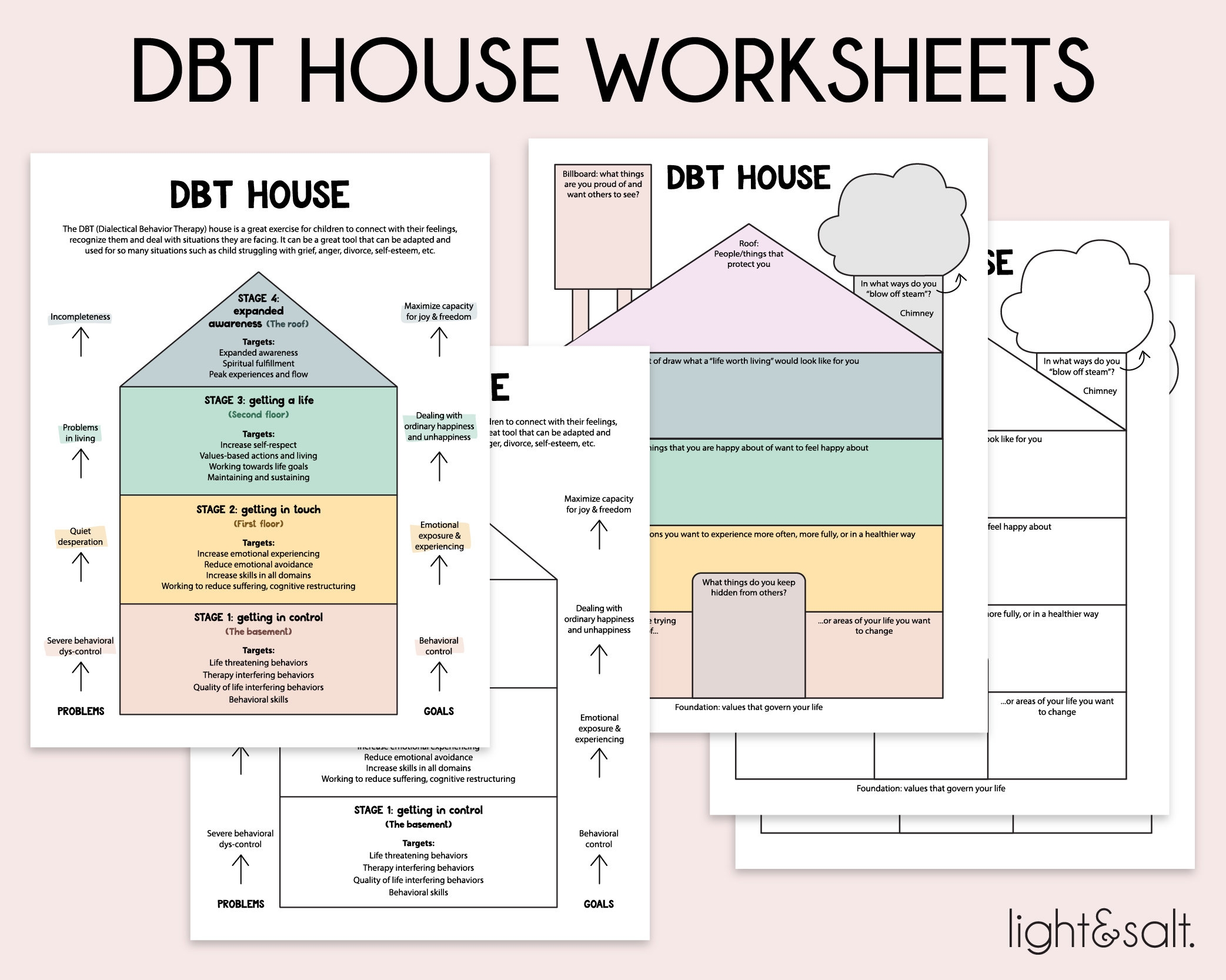
The Dbt House Worksheet is a visual representation of the Dialectical Behavior Therapy (DBT) model. It helps users understand the different components of their emotional experiences. The worksheet is structured like a house, with various rooms representing different emotional states and coping strategies. Each section prompts users to identify and articulate their feelings, thoughts, and actions, making it easier to understand their emotional landscape.
Components of the Worksheet
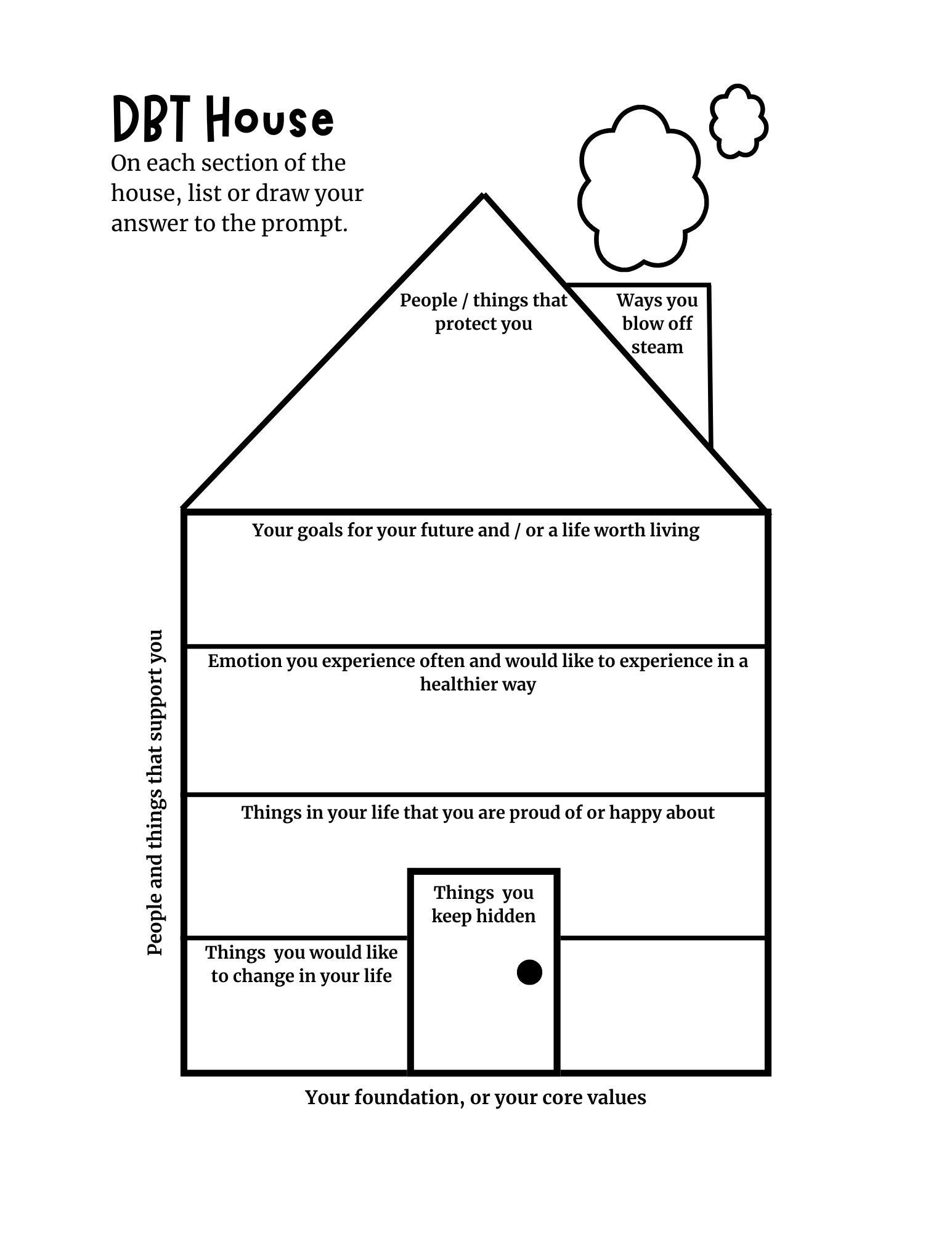
The worksheet typically includes sections such as:
- Foundation: Represents core beliefs and values.
- Rooms: Different rooms symbolize various emotions (e.g., anger, sadness, joy).
- Roof: Represents goals and aspirations.
- Windows: Symbolize how one views the world and interacts with others.
This clear organization allows users to visually map out their emotional experiences, which can be particularly beneficial for students who may struggle with abstract concepts.
How to Use the Dbt House Worksheet
1. Download and Print the Worksheet
Begin by finding a reliable source to download the Dbt House Worksheet Free Printable. You can usually find it in PDF format, which is ideal for printing. Make sure to print it in a standard paper size, like 8.5″ x 11″, which fits well in most binders or folders.
2. Introduce the Worksheet to Your Students or Children
Before diving in, explain the purpose of the worksheet. Discuss the importance of understanding emotions and how this tool can help. You might say something like, “This worksheet will help us think about our feelings and how we can manage them better.”
3. Guide Them Through Each Section
As you work through the worksheet, encourage your students or children to take their time. Start with the foundation—ask them to write down their core beliefs. This might include statements like, “I am capable” or “I deserve to be happy.”
Next, move to the rooms. Discuss different emotions and ask them to reflect on when they feel each one. Encourage them to be honest and think deeply about their experiences.
4. Discuss Goals and Views
Once they fill in the rooms, guide them to the roof. Have them identify personal goals or aspirations. What do they want to achieve emotionally or academically? This part encourages forward thinking and helps them visualize a positive future.
5. Reflect on the Process
After completing the worksheet, engage in a discussion about their findings. Ask questions like, “What did you learn about yourself?” or “How can you use this information to handle difficult situations?” This reflection is crucial for reinforcing the skills they’re developing.
When to Use the Dbt House Worksheet
This worksheet can be used in various settings:
- Classroom Activities: Incorporate it into health or psychology classes to teach emotional literacy.
- Counseling Sessions: School counselors can use it to facilitate discussions with students struggling with emotional regulation.
- Home Practice: Parents can use the worksheet during family discussions about feelings, enhancing emotional awareness in a supportive environment.
Tips for Effective Use
- Create a Safe Space: Ensure that students feel safe to express their feelings. Set ground rules for confidentiality and respect.
- Encourage Creativity: Allow students to decorate their worksheets. This can make the activity more engaging and personal.
- Follow Up: Revisit the worksheet periodically to assess progress and encourage ongoing reflection.
Using the Dbt House Worksheet Free Printable can significantly enhance emotional understanding and coping skills in students. By following these steps, you can create an enriching experience that fosters personal growth and emotional intelligence.
To get started, choose a quiet time for reflection, download the worksheet, and prepare to explore the landscape of emotions with your students or children.
Dbt House Worksheet Free Printable Gallery